Surfing Hawaii Retro Svg Bundle Review
As a designer who spends more time than I care to admit staring at stitch charts and debating the merits of various thread sheens, I approach every new digital embroidery file with a healthy dose of skepticism. We have all been there: you buy a bundle promising vibrant, ready-to-stitch graphics, only to find that the details vanish in the hoop or the color palette clashes with your favorite fabric. That is why I decided to put the Surfing Hawaii Retro Svg Bundle through its paces. This collection falls squarely into the Crafts and Graphics categories, but for those of us in the handmade space, it is about much more than just aesthetics. It is about viability, marketability, and whether this design will actually hold up on a finished product.
First Impressions and Visual Personality
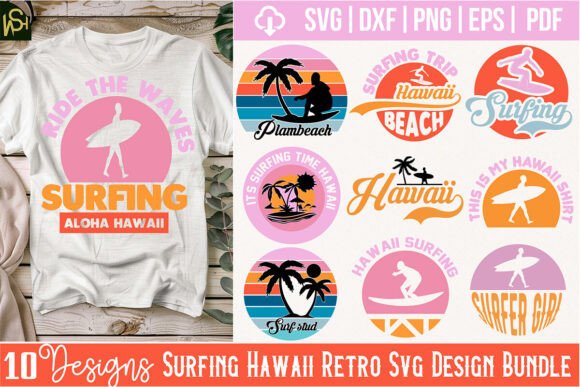
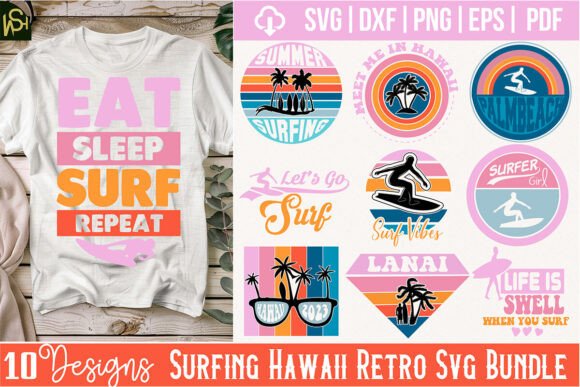
The moment you unzip the folder—remember, you must unzip the file folder once it is downloaded to retrieve your files—you are greeted by ten distinct SVG files. The immediate takeaway from the Surfing Hawaii Retro Svg Bundle is its strong nostalgic appeal. The aesthetic leans heavily into mid-century modern vibes mixed with classic surf culture. It feels sunny, relaxed, and undeniably summery without being cliché. For a designer, this visual personality is a gift because it translates well across multiple mediums. Whether you are working on a custom apparel line or creating a series of personalized gifts, the mood is consistent and recognizable.
The shapes within these designs are clean and bold. This is crucial for machine embroidery. Intricate, hairline details often get lost in the underlay stitches, but these retro silhouettes rely on strong lines and solid forms. When I looked at the layout options, I could immediately see how they would perform as an embroidered patch or a centered chest logo on a sweatshirt. The visual weight is balanced, which means it won’t look overwhelming on a small tote bag nor too sparse on a large pillow cover. It strikes that difficult balance between decorative and functional.
Real-World Application: The Tote Bag Scenario
To truly evaluate any machine embroidery design, I like to imagine a specific use case. Let’s talk about preparing a custom embroidered tote bag for a local craft fair. You want something that catches the eye from across the room but also feels high-quality enough to justify a premium price point. Using the Surfing Hawaii Retro Svg Bundle for this project makes perfect sense. Imagine a sturdy canvas tote in a natural beige or a soft pastel blue. Placing one of these retro surfing graphics on the front creates an instant conversation starter.
For an Etsy seller or a small shop product owner, this versatility is key. The same design assets can be adapted for a kitchen towel using a simple running stitch border, or scaled up for a sweatshirt embroidery project where the fill stitch provides texture against the fleece. I also envision this working beautifully for holiday embroidery if used as a summer-themed gift for someone moving to a coastal area, or perhaps for a beach wedding favor. The design’s adaptability increases its value significantly beyond just a single-use graphic.
Performance in Stitching and Fabric Interaction
When we move from screen to fabric, things change. How does the Surfing Hawaii Retro Svg Bundle handle different materials? In my experience, retro styles with bold outlines tend to work exceptionally well with satin stitches, providing a crisp edge that defines the shape. However, designers need to be mindful of the stitch density. If the design includes heavy fill areas, it might become stiff on delicate fabrics. For a handmade product intended for everyday use, like an apron or a tea towel, this stiffness is usually acceptable. But for baby embroidery items, such as a onesie or a burp cloth, you need to ensure the backing stabilizer is lightweight so the garment remains soft against sensitive skin.
I also considered how this looks on textured fabrics. A chunky knit blanket might compete with the clean lines of the SVG, potentially obscuring the finer details of the wave or the surfboard. On smooth cottons, linens, or denim, the design pops. The contrast between the thread colors and the fabric texture is where the true artistry lies. If you are using dark fabric, you will need to choose thread colors carefully to ensure the retro hues remain visible and don’t get swallowed by the background. Testing this in black and white mockups first is a pro tip that helps visualize the tonal values before you commit to threading your machine.
Where Caution Is Required
While the Surfing Hawaii Retro Svg Bundle is versatile, it is not a magic bullet for every situation. There are specific scenarios where you should exercise caution. Avoid placing this design in very small hoop sizes unless you are confident in your digitizing skills to simplify the details. Tiny lettering or intricate corner details may merge together if the scale is too small, resulting in a muddy appearance. Similarly, stretchy fabrics like spandex blends require a heavy-duty stabilizer to prevent puckering, which can distort the retro shapes.
Curved surfaces, such as baseball caps, present another challenge. While the design might look flat and perfect on your computer screen, transferring those curves onto a rounded cap surface requires precise hooping techniques. If the design has sharp angles, they might look distorted when stretched over the curve. For commercial embroidery projects involving curved items, always do a test run on scrap material first. Additionally, if the final product will undergo frequent washing, such as a dish towel or a child’s clothing, ensure your stitching is dense enough to withstand abrasion without fraying.
Practical Designer Notes for Success
Before you rush to list these designs on your shop, here are some practical steps to ensure your finished product meets professional standards. First and foremost, inspect the small details in each of the ten SVG files. Look for any overlapping paths or unnecessary nodes that might cause your machine to take inefficient routes. Check whether the design works for both personal and commercial projects by reviewing the license terms included in the download. This is non-negotiable for anyone selling their wares.
Use a proper stabilizer that matches the weight of your fabric. A cut-away stabilizer is generally safer for long-term durability, especially for items like tote bag design variations that will carry heavy loads. Test the thread colors against your actual fabric swatches. Digital screens can lie about color accuracy; what looks like a vibrant coral on your monitor might appear muted on a grey heather shirt. Finally, compare light and dark fabric backgrounds to see how the design shifts in mood. A retro surfing theme might feel playful on yellow but sophisticated on navy.
Final Verdict
The Surfing Hawaii Retro Svg Bundle is a solid addition to any craft business inventory. It offers a cohesive, stylish aesthetic that appeals to a broad audience looking for design assets with character. From apparel decorators to creative entrepreneurs, this bundle provides the flexibility needed to create unique, marketable items. By paying attention to fabric choice, stabilization, and detail inspection, you can transform these digital files into high-quality embroidery projects that customers will love. Just remember to unzip that folder, check your licenses, and let your creativity ride the wave.